
Key Features
Frequently Asked Questions
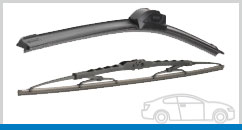
Wiper Blades
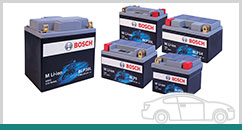


Air Filters
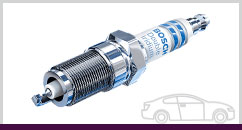
Spark Plugs
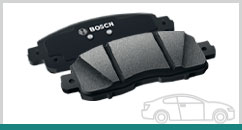
Bosch Heavy Duty Repair
Bosch Fleet Solutions
The Bosch Module Program
How to Replace Brake Pads and Rotors on a Vehicle: A Bosch Solves Tutorial
How to Fix a Car Air Conditioning Problem: A Bosch Solves Tutorial
Replacing a rear view mirror with an ADAS front facing camera inside
Customized programs for the automotive repair professional.
Find out how Bosch Parts and Tools solve your next automotive project.
Innovation Recognizes Innovation.
With over 100 years of perfecting innovation, Bosch Wiper Blades are designed for the road ahead. The future is clear with Bosch Wiper Blades.
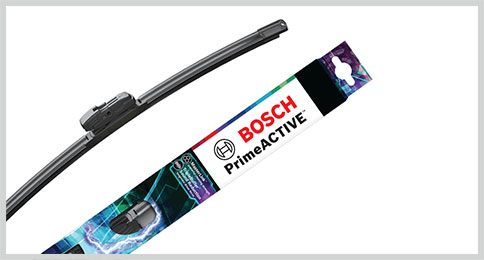
PrimeACTIVE™
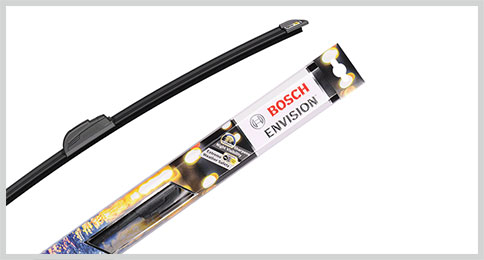
ENVISION™
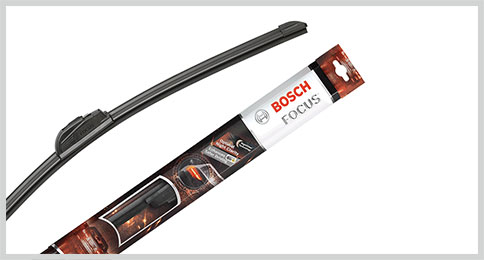
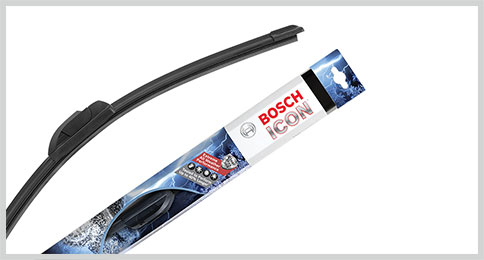
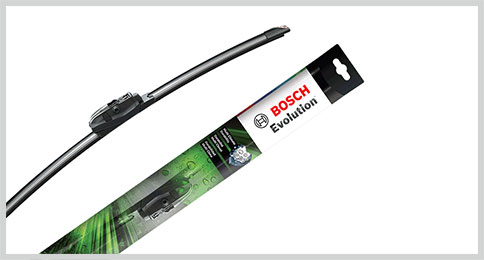
Evolution™
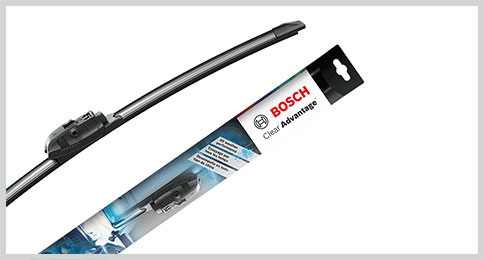
Clear Advantage™
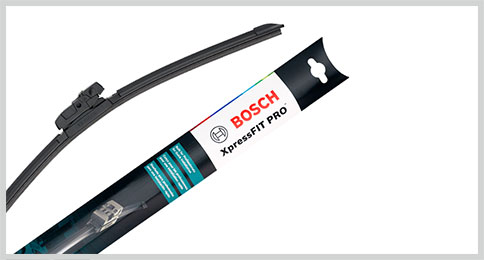
XpressFIT PRO™
Wiper blades aren’t just another car part. When you drive with Bosch Wiper Blades, you drive with the knowledge, power and innovation of the world’s largest automotive supplier. We’ve spent over 100 years perfecting our wiper blades. Engineered with advanced rubber formulations, we’ve developed state-of-the-art coating technology for enhanced cleaning performance and durability. Our blades have endured rigorous testing in extreme temperatures. Designed with the smallest details in mind, the blade profiles reduce noise and optimize water clearance. Bosch Wiper Blades are designed for the road ahead. The future is clear with Bosch Wiper Blades.
Click to shop Bosch Wiper Blades at these automotive retailers.
PrimeActive™
ENVISION™
Evolution™
Clear Advantage™
XpressFIT PRO™
The future is clear with Bosch Wiper Blades.
A Bosch Switching-Type Oxygen (O2) sensor uses a zirconia Nernst cell ceramic element to measure the oxygen content in exhaust gases. As the air-fuel mixture shifts between rich and lean, the sensor rapidly switches its voltage output. These fast transitions provide the ECU with real-time lambda data, allowing precise fuel adjustments for stable combustion, effective catalytic converter operation, and reduced emissions.
Modern EPA and Euro 6 emissions standards demand accurate air-fuel-ratio control to ensure clean and efficient combustion. Oxygen (O2) sensors supply the ECU with continuous lambda information, enabling proper catalytic converter function, reduced fuel consumption, and minimized harmful emissions across all operating conditions.
A Bosch Wideband A/F Oxygen (O2) sensor uses a planar pump-cell design to measure the air-fuel ratio continuously across the full lambda range. Instead of switching between rich and lean, the sensor regulates internal pump-cell current to maintain a precise oxygen balance within the sensing chamber. This current is interpreted by the ECU as exact air-fuel-ratio information, allowing highly accurate mixture control for stable combustion, improved efficiency, and reduced emissions.
An Oxygen (O2) sensor should be replaced if a check-engine light appears and diagnostic trouble codes related to fuel-trim or sensor performance are stored, or if symptoms such as poor fuel economy, failed emissions tests, rough idle, or sluggish acceleration occur. Sensors contaminated by oil, coolant, fuel additives, or physical damage should also be replaced to restore accurate air-fuel-ratio control.